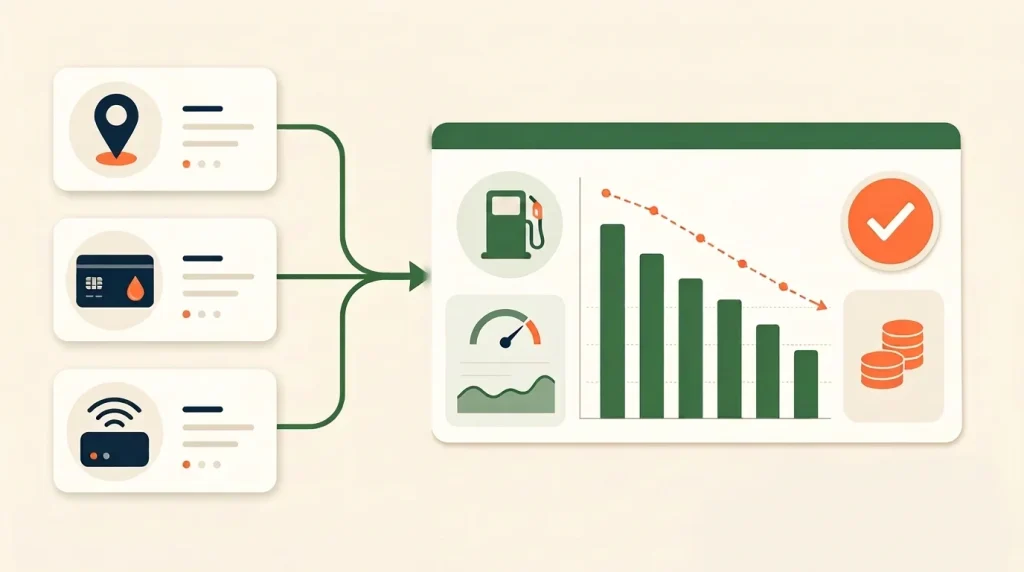

Most fleets don’t have a maintenance problem until they do. A vehicle runs fine, then a warning light comes on, then it’s off the road for three days while a workshop finds a service slot. Multiply that across ten, twenty, or fifty vehicles and it turns into a pattern that quietly costs a business far more than the servicing itself. This article looks at the real difference between reactive repairs and planned fleet maintenance, what a proper maintenance program actually covers, and how it fits into outsourced fleet management.
Key takeaways
- Reactive maintenance, fixing things once they break, is consistently more expensive than planned servicing, both in repair cost and lost vehicle days
- The hidden costs of reactive maintenance rarely show up as a single line item, they build up quietly across repairs, downtime, wear, and warranty exposure
- Real-time vehicle data can flag engine faults, battery health, tyre pressure, and brake issues well before they become a breakdown
- A schedule only works if it’s actually followed, which is why automated reminders matter as much as the schedule itself
- Maintenance records also support Chain of Responsibility documentation and audit-readiness, not just vehicle upkeep
- Outsourcing maintenance management removes the scheduling and admin burden without removing the business’s oversight
What is fleet maintenance management?
Fleet maintenance management is the ongoing process of scheduling, tracking, and actioning every service, inspection, and repair a fleet needs, rather than waiting for a vehicle to signal a problem. It covers servicing intervals, tyre and fluid checks, defect reporting, and the records that prove all of it happened on time. Some businesses call this fleet servicing management instead, the terms describe the same discipline: keeping every vehicle serviced on time rather than reacting once something’s already gone wrong.
For a business running two or three vehicles, this can usually be tracked in someone’s head or a shared calendar. It rarely stays that simple. Once a fleet grows past a handful of vehicles, informal tracking starts to miss things, a service date slips past, a defect gets noticed but not logged, a vehicle keeps running because nobody flagged it was due. None of this is usually anyone’s fault. It’s just what happens when maintenance competes with a dozen other jobs on someone’s desk.
A working maintenance program removes the guesswork. Every vehicle has a schedule, every service is tracked against kilometres or time, and nothing depends on someone remembering.
Why reactive maintenance costs more than planned maintenance
Reactive maintenance costs more because problems caught early are cheap to fix, and problems caught late usually aren’t. A service that gets pushed out a few thousand kilometres doesn’t just become a slightly later service. It often becomes a bigger job, with additional wear that wasn’t part of the original scope, and the bill rarely stays proportional to how small the original issue was.
The costs tend to show up in a few consistent places once a fleet starts running reactively instead of on a schedule:
- Higher repair costs. Emergency fixes usually mean urgent parts and urgent labour, both of which cost more than the same job booked in ahead of time. A missed interval can also mean one worn part takes a second, more expensive part down with it, a brake job that should have been a simple pad swap now needs a rotor too.
- Vehicle downtime. A scheduled service is booked in, completed, and the vehicle is back on the road the same day in most cases. A breakdown means diagnosis time, parts sourcing, and a repair queue, on top of whatever job that vehicle was meant to be doing.
- Accelerated wear and shortened lifespan. Oil that should have been changed keeps circulating past its useful life, increasing friction on engine components that are expensive to replace. Vehicles running reactively tend to wear out faster and get replaced sooner than they should need to be.
- Warranty and resale exposure. Manufacturers can be strict about service intervals, and a warranty claim is harder to argue if the service history has gaps. A vehicle’s resale value is generally stronger with a complete, provable service history behind it, since buyers are more confident they’re not inheriting someone else’s deferred maintenance.
- Unpredictable budgeting. Scheduled servicing is a cost a business can plan for. Emergency repairs aren’t, and a fleet running reactively tends to carry a maintenance budget that swings wildly month to month rather than sitting somewhere predictable.
None of these costs show up as a single obvious line item. They accumulate quietly, which is exactly why reactive maintenance often feels cheaper than it actually is.
The benefits of a planned maintenance program
Shifting to planned maintenance flips each of those costs into an advantage:
- Lower repair costs. Early detection catches a worn component while it’s still a minor fix, not after it’s taken a second part down with it.
- Less downtime. Servicing booked ahead of a due date means the vehicle is off the road for hours, not days.
- Longer vehicle lifespan. Consistent servicing keeps wear where it should be, rather than letting a missed interval accelerate it.
- Protected warranty and resale value. A complete, dateable service history means no gaps for a buyer or a manufacturer to question.
- Predictable budgeting. A scheduled service is a known line in a budget rather than a surprise invoice.
- Better fuel efficiency. A fault that would otherwise quietly increase fuel use gets picked up and corrected early.
The flow-on effect is a fleet that’s simply easier to run. Drivers spend less time waiting on roadside assistance, and the business spends less time absorbing the disruption of an unplanned vehicle off the road.
What a planned maintenance program actually includes
A working fleet servicing program is built around consistent checks rather than a single annual service, but the actual timing shouldn’t be forced onto a universal calendar. A vehicle doing high kilometres on a courier run wears differently to one used for occasional site visits, and the manufacturer’s own schedule is usually the starting point, not a generic monthly or quarterly rule. In practice, this means routine checks on tyres, fluids, lights, and general condition sitting alongside manufacturer-scheduled servicing for oil, filters, and brakes, with deeper inspections and major services layered in at the intervals the vehicle actually needs, based on its kilometres or engine hours rather than a fixed date.
How real-time vehicle data catches problems early
Modern fleet telematics does more than track where a vehicle is. Connected to a vehicle’s onboard diagnostics, it reads directly from the same sensors a mechanic would plug into, which means issues can be flagged the moment they start rather than once a dashboard light finally comes on or a driver mentions something feels off.
In practice, this data typically covers:
- Engine fault codes. Diagnostic trouble codes are picked up in real time, flagging specific issues like thermostat or sensor faults well before they become a breakdown.
- Fluid and temperature monitoring. Live coolant temperature and fuel level data can flag a developing issue before it shows up as a dashboard warning.
- Battery health. Battery voltage is tracked continuously, which can surface early signs of electrical failure before a vehicle fails to start.
- Tyre pressure. Tyre pressure monitoring data flags slow leaks and low pressure before they become a safety issue or a blowout.
- Brake and component signals. Electrical fault signals tied to braking components can highlight developing issues in the braking system.
- Fuel efficiency drops. A sudden change in fuel consumption or idling patterns often points to a mechanical fault before it’s obvious anywhere else.
The value isn’t the data itself, it’s what it does to the maintenance schedule. Instead of a service reminder based on a rough estimate of how a vehicle is probably being used, the reminder is triggered by what’s actually happening inside that specific vehicle.
The compliance and safety case for maintenance records
A documented maintenance history does more than protect the vehicle. It protects the business. Clean, dated servicing records are part of what supports Chain of Responsibility documentation, and they’re the first thing an insurer or an auditor will want to see if a vehicle is involved in an incident.
This is where maintenance overlaps with driver safety and coaching. A vehicle with worn brakes or bald tyres puts a driver at greater risk regardless of how carefully they drive, and a maintenance gap is often the harder-to-see half of a fleet’s safety picture. Keeping servicing on schedule and keeping the paperwork to prove it isn’t extra admin layered on top of fleet safety. It’s a core part of it.
How outsourced fleet maintenance management works
Handing maintenance management to a dedicated fleet partner doesn’t mean losing sight of what’s happening to the vehicles. It means the scheduling, the workshop bookings, the reminders, and the record-keeping move off someone’s desk and onto a system built specifically to run them.
In practice, this means:
- Every vehicle sits on a single platform with its full service history attached, so nothing depends on one person’s memory or a spreadsheet that only one team member updates.
- Servicing is booked ahead of the due date rather than reacted to once a warning light appears.
- Defects reported by drivers are logged and actioned rather than mentioned once and forgotten.
- The records that build up over time, every service, every inspection, become the evidence a business needs for warranty claims, insurance, resale, and audit purposes.
A schedule is only as good as whether it’s actually followed, and this is usually where things quietly break down. Drivers are focused on the job in front of them, not a service date sitting somewhere in a calendar, and a single reminder sent once tends to get missed or forgotten in a busy week. A managed program handles this with automated reminders that escalate as a due date approaches, rather than relying on a driver to notice, remember, and act on it themselves. That takes the responsibility for chasing servicing off the driver and off whoever would otherwise need to follow up with them.
For a growing fleet, this is usually the point where maintenance stops being a task someone squeezes in and becomes a properly run function of the business, without needing to hire for it. You can read more about how this fits into the broader picture on our outsourced fleet management hub page.
Frequently Asked Questions
How often should fleet vehicles be serviced?
Fleet servicing should follow manufacturer recommendations, which is typically every 10,000 to 15,000 kilometres or 12 months for standard light commercial vehicles. However, servicing intervals depend on the make, vehicle model, and how it’s used on the job. Scheduling maintenance around actual vehicle data, both kilometres travelled and time elapsed, protects your manufacturer’s warranty and helps avoid unnecessary downtime.
What’s the real cost of skipping a scheduled service?
Beyond the immediate repair, a missed service can mean a bigger job once the issue is finally addressed, more vehicle downtime, potential warranty complications, and a lower resale value due to gaps in the service history. The cost rarely shows up as a single line item, which is part of why it’s easy to underestimate.
Does fleet maintenance help with compliance?
Yes. A documented maintenance history supports Chain of Responsibility obligations and gives a business clean, dateable records if it’s ever audited or involved in an insurance claim. It’s one of the clearest ways to show a fleet has been run responsibly.
Can telematics actually detect maintenance issues, or just track location?
Modern telematics goes well beyond location. Connected to a vehicle’s onboard diagnostics, it can pick up engine fault codes, battery voltage, coolant temperature, tyre pressure, and sudden drops in fuel efficiency, often flagging a developing issue before it shows up as a dashboard warning or an obvious problem on the road.
Can maintenance be managed without an internal fleet manager?
Yes, and for most small to mid-sized fleets this is exactly where outsourcing helps most. A managed maintenance program runs the scheduling, bookings, and record-keeping without requiring a dedicated internal hire.
Ready to get ahead of the next breakdown?
We’ll look at your current maintenance schedule, or lack of one, and show you what a properly managed program would look like for your fleet.