Fuel is one of the largest variable costs in any fleet, and for most businesses it’s also one of the least visible. The fuel card statement arrives, the total gets paid, and nobody looks much closer than that. This guide from Your Fleet Team explains what fleet fuel management actually involves, what it uncovers, and how a fleet partner turns that spend from a cost you absorb into one you can actually control.
Key takeaways
- Fuel management connects vehicle behaviour, fuel card transactions, and platform data to explain why fuel spend looks the way it does, not just what it totals
- A comprehensive system reveals far more than fuel waste. It catches theft, fraud, developing mechanical faults, and inefficient routing too
- Fuel card data alone only shows what was spent. Matched against vehicle and driver data, it shows whether that spend was reasonable
- Driver coaching and fuel efficiency are the same behaviours viewed from two angles, smoother driving cuts both crash risk and fuel spend
- None of this requires hiring a dedicated fleet manager. It requires a fleet partner who’s actually watching the data, not a dashboard nobody has time to check
What is fleet fuel management?
Fleet fuel management is the process of tracking how a fleet uses fuel and using that data to reduce waste, rather than simply paying whatever the fuel card bill comes to each month. It covers consumption, idling, driver behaviour, and route efficiency, and depends on connecting several data sources rather than watching any single number in isolation.
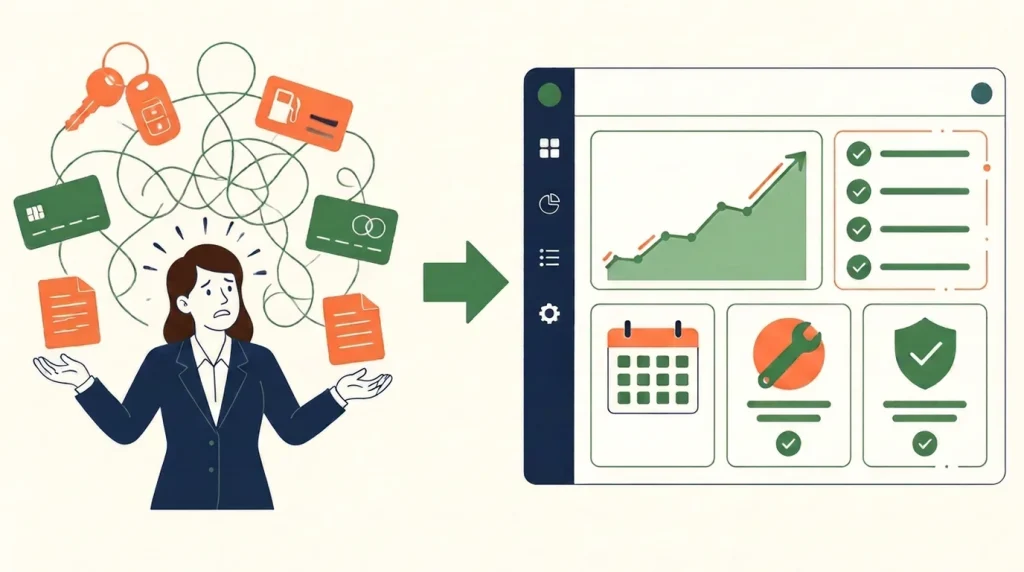
For a one or two vehicle operation, fuel is easy enough to eyeball. That stops working once a fleet grows past a handful of vehicles. A fuel card statement with forty transactions on it doesn’t say which vehicle is running efficiently, which one has a developing fault, or which driver’s habits are quietly costing more than anyone realised. The statement just shows a number. Fuel management systems exist to explain that number.
Why fuel costs are hard to control without data
A fuel card statement tells a business what it spent. It doesn’t tell a business why.
Two vehicles doing the same job, covering similar distances, can carry a genuinely different fuel bill with no obvious reason on paper. That gap only becomes visible once fuel spend is matched against what each vehicle and each driver was actually doing at the time. That’s the difference between fuel cost tracking, which most businesses already do without thinking about it, and fuel cost management, which very few do properly without the right data behind it.
The three data sources that make fuel management possible
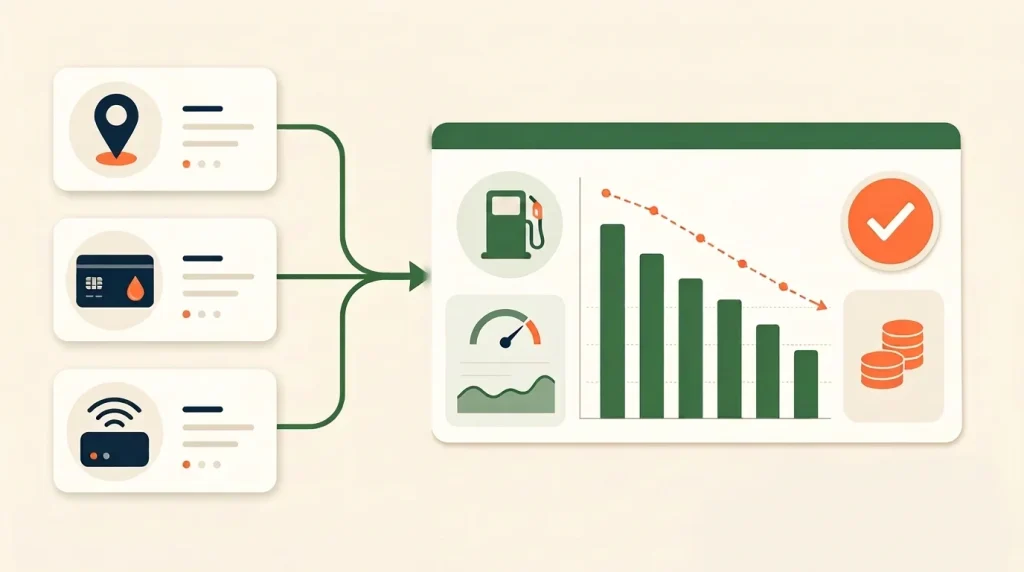
Real fuel management draws on three connected sources rather than one.
| Data source | What it captures |
|---|---|
| Vehicle and driver behaviour data (telematics) | Idling time, harsh acceleration and braking, route inefficiency, and engine faults |
| Fuel card data | Spend by vehicle and driver, litres purchased against expected consumption, and transaction location and timing |
| A connected fleet platform | Fuel data sitting alongside maintenance and utilisation records, so a pattern in one area gets checked against the others |
On their own, each source tells part of the story. Brought together, here’s what they actually reveal.
What a comprehensive fuel management system reveals
Driver behaviour and habits
- Excessive idling: flags vehicles burning fuel while stationary, and points to which drivers are leaving the engine running during stops
- Harsh driving events: highlights spikes in fuel use caused by speeding, harsh braking, and rapid acceleration
- Unauthorised use: flags a vehicle driven outside business hours or off an approved route
Theft and fraud
- Card and location mismatches: flags a fuel card transaction in a location the vehicle’s GPS data says it wasn’t in
- Sudden fuel loss: detects a rapid drop in fuel level while a vehicle is parked or switched off, a sign of siphoning
- Capacity mismatches: catches a fuel purchase larger than the vehicle’s actual tank capacity
Maintenance and asset health
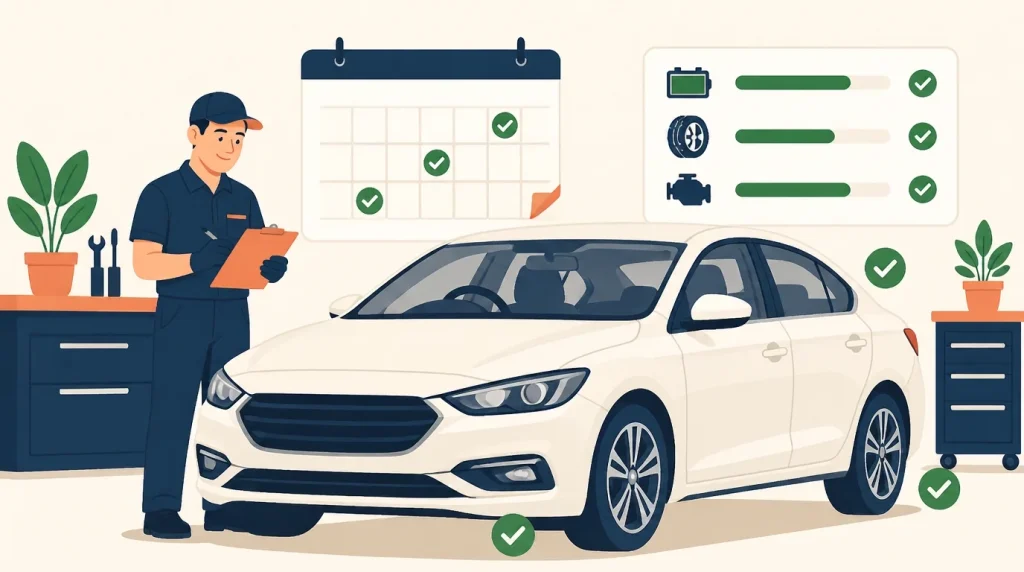
- Hidden engine faults: a sudden drop in fuel economy can reveal a developing issue, like a failing sensor, well before it becomes a breakdown
- Tyre pressure: underinflated tyres increase rolling resistance and fuel use in a way that’s easy to miss without the data
- Ageing assets: consistently high running costs on an older vehicle help build the case for replacement, rather than a guess
Operational and administrative inefficiencies
- Inefficient routing: flags a route carrying more delays or stops than a comparable alternative, so dispatchers can adjust
- Fuel price differences: identifies which regional service stations offer better rates, so fuelling stops can be directed accordingly
- Fuel Tax Credit support: accurate, per-vehicle fuel and GPS data builds the audit trail behind a Fuel Tax Credit claim, for businesses that qualify
From insight to action
Spotting a pattern is only half the job. The value is in the decision it leads to, and that decision usually needs a bit more thought than the raw data alone provides.
Idling
- The data: A vehicle shows idling time noticeably higher than the fleet average
- The insight: Raw idling minutes don’t mean much without context. A courier van doing twenty stops a day will always show more idling than a single-site trade ute, so comparing it against the whole fleet average flags the wrong vehicle for the wrong reason
- The decision: Idling gets benchmarked against similar vehicles doing similar work, not the whole fleet, so a courier van isn’t coached for simply doing its job while an actual outlier within its own category gets picked up properly
Fuel misuse
- The data: A fuel card is used twice in one day, in two locations too far apart for the vehicle to have realistically travelled between them
- The insight: That points to the card being used on a different vehicle, or fuel purchased without a matching trip, but it could also just be a data lag or a colleague genuinely borrowing the card
- The decision: The transaction gets queried with the driver directly before it’s treated as a pattern, rather than assumed to be misuse on the first instance
This is also where fuel management and driver safety and coaching overlap almost completely. The habits that waste the most fuel, harsh acceleration, heavy braking, aggressive cornering, are the same habits that carry the highest crash risk. A coaching program built around eco-driving principles isn’t separate from fuel management. It’s the same data, viewed through both lenses at once.
This doesn’t need an internal hire, it needs a fleet partner
None of this requires a business to hire someone whose full-time job is watching fuel reports, or to buy a platform and hope someone in the office finds time to check it. It requires a fleet partner actively watching the data and acting on it.
For most small and mid-sized businesses, this is exactly where outsourced fleet management earns its keep. A dedicated account manager reviews fuel, driving, and maintenance data as part of running the fleet day to day, rather than a business owner or office manager trying to make sense of a fuel card statement on top of everything else. Issues get flagged and acted on as they appear, not discovered three months later when someone finally sits down to reconcile the numbers.
Fuel spend you can actually explain
A fuel card statement was never going to say why one vehicle costs more to run than another, or why this month’s total is higher than last month’s. It was only ever built to show what was spent, not what was behind it.
That’s the real shift fleet fuel management makes. The spend doesn’t disappear, but it stops being a number that just gets absorbed every month and starts being something with a clear cause attached, a habit worth coaching, a fault worth fixing, a route worth adjusting, or a transaction worth questioning. Once fuel spend can be explained, it can be managed.
Frequently Asked Questions
How much can fleet fuel management actually save?
The saving depends on fleet size, vehicle type, and how much waste was going unnoticed beforehand, so there’s no single figure that applies across every business. What’s consistent is where the savings come from: reduced idling, smoother driving, earlier fault detection, and catching fraud or misuse before it becomes a habit.
Do I need telematics to do fuel management properly?
Telematics data is what makes fuel management precise rather than approximate. Without it, a business can still review fuel card totals, but it can’t connect that spend to specific driving behaviour or catch a developing mechanical fault before it shows up as a bigger repair bill.
Can fuel management detect fuel theft or card misuse?
Yes. Matching fuel card transactions against a vehicle’s actual GPS location and fuel level is one of the more common ways theft and misuse get caught, whether that’s a card used somewhere the vehicle never was, or a fuel level dropping overnight with no trip logged against it.
How does a fuel card work alongside vehicle tracking?
A fuel card records what was spent and where. Vehicle tracking records where the vehicle actually was and what it was doing at the time. Matched together, the two confirm whether fuel spend lines up with genuine business use, which is far harder to establish from either data set on its own.
Is fuel management only worth it for large fleets?
No. The behaviours that waste fuel, idling, harsh driving, an undetected mechanical fault, exist in fleets of any size. A smaller fleet won’t generate the same volume of data as a larger one, but the same principle applies: fuel spend that isn’t measured against actual vehicle use is hard to control.
Can fuel management help reduce our fleet’s emissions as well as costs?
Yes. Reduced idling and smoother driving lower fuel consumption and emissions at the same time, since they’re the same underlying behaviours.
Ready to see where your fuel spend is actually going?
We’ll show you what your fuel data looks like when it’s connected to what your vehicles and drivers are actually doing, not just a total at the bottom of a monthly statement.
Talk to a fleet specialist.