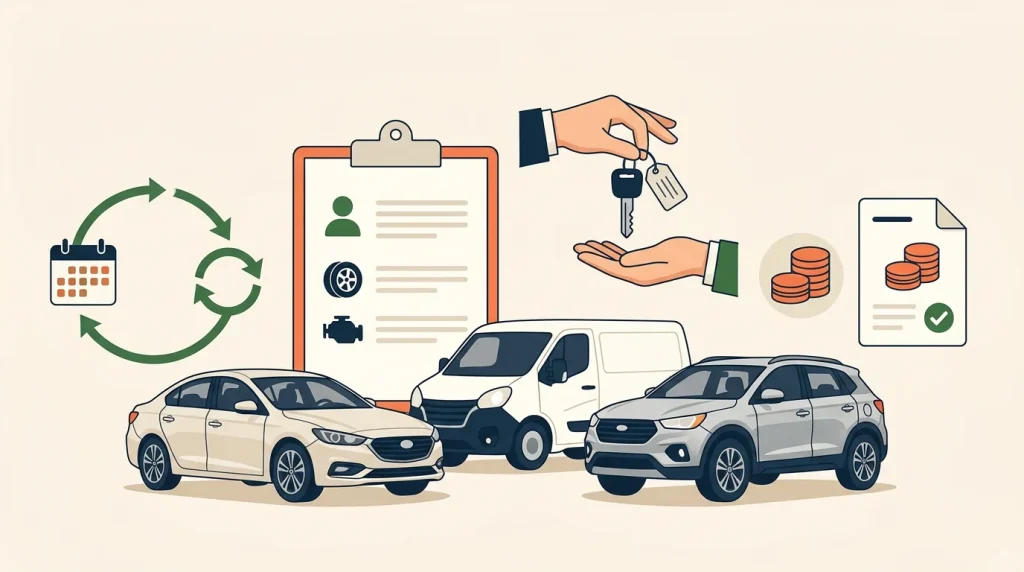
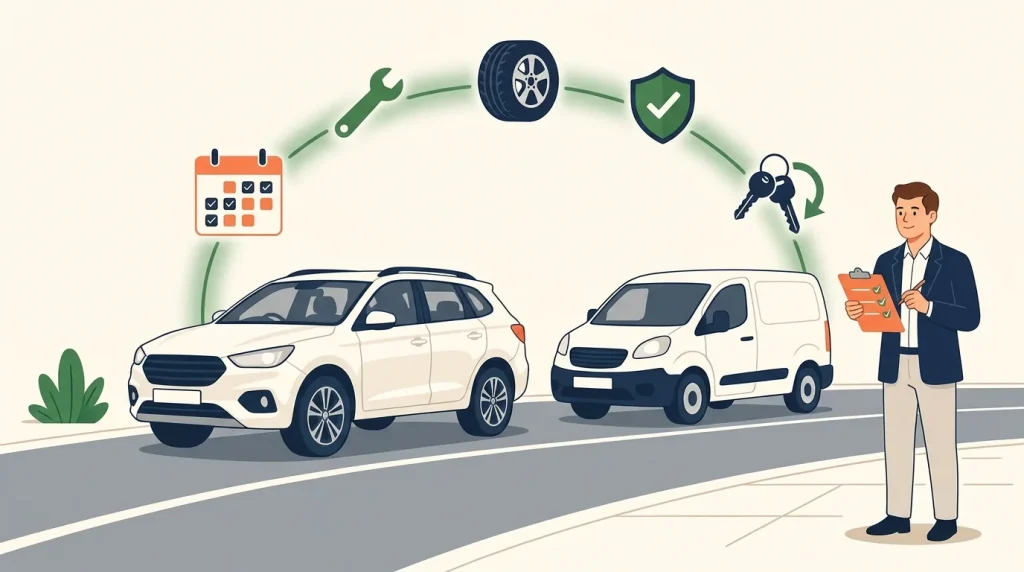
A fully maintained operating lease bundles a vehicle’s funding and most of its running costs into one fixed monthly payment. The leasing provider owns the vehicle and looks after servicing, tyres, registration, roadside assistance and more for the length of the lease, then takes it back at the end. It’s a very common way Australian businesses lease light commercial and passenger fleets, and one of the most hands-off. This guide from Your Fleet Team, an Australian fleet leasing and fleet management provider, explains what’s included, how the monthly rate is worked out, what’s usually excluded, and how to compare quotes properly.
Key takeaways
- A fully maintained operating lease combines vehicle funding, maintenance and admin into one fixed monthly payment per vehicle
- It typically covers servicing, repairs from normal wear, tyres, registration, roadside assistance and more, depending on the agreement. Insurance can also be included, so always ask your provider
- Fuel, damage beyond fair wear and tear, excess kilometres, fines and tolls are usually billed separately
- The monthly rate is driven mainly by the vehicle price, its expected end-of-term value, the lease term and the kilometre allowance
- Two quotes are only comparable when they use the same term, the same kilometre allowance and the same inclusions
- At the end of the term, you return the vehicle with no resale responsibility
What is a fully maintained operating lease?
A fully maintained operating lease is a long-term vehicle rental where the monthly payment covers both the use of the vehicle and the cost of keeping it on the road. The provider owns the vehicle, carries the risk on its resale value, and manages the running costs on your behalf.
It’s one of the lease structures covered in our guide to fleet leasing explained. What sets it apart from a standard operating lease is the maintenance and management layer. With a standard lease, you get the vehicle and your team handles the rest. With a fully maintained lease, the provider books the services, replaces the tyres, renews the registration and sends you consolidated reporting.
For a business without a dedicated fleet manager, that difference is the point. The admin that usually lands on an operations or office manager moves to a dedicated account manager.
What’s included in a fully maintained operating lease?
A fully maintained operating lease typically includes scheduled servicing, repairs from normal wear, tyres, registration and roadside assistance. Exact inclusions vary between providers and agreements, so always check the detail in writing.
| Typically included | Sometimes included | Usually billed separately |
|---|---|---|
| Vehicle funding | Comprehensive insurance | Fuel |
| Scheduled servicing | Fuel card and fuel reporting | Damage beyond fair wear and tear |
| Repairs from normal wear | Toll and infringement handling | Excess kilometres |
| Tyres, within an agreed allowance | Telematics | Traffic fines and toll charges |
| Registration and CTP | Driver safety coaching | Accessories added after delivery |
| Roadside assistance | FBT reporting | Costs from misuse |
| Account management and reporting |
Insurance is the inclusion that can vary between providers. Ask whether comprehensive insurance is in the quote, and check the excess and cover levels.
Fuel is usually billed on actual use rather than built into the fixed rate, often through a fuel card, because it varies too much with driving patterns to price in advance. Some providers manage fuel, tolls and fines alongside the lease even though the costs themselves are passed through at actual rates.
How the monthly rate is worked out
The monthly rate on a fully maintained operating lease is built from the vehicle’s cost, the value it’s expected to have at the end of the lease, the cost of funding it, and a budget for running costs over the term. The term and kilometre allowance you choose affect almost every part of that calculation.
The main components are:
- Vehicle price. The purchase price after fleet discounts, plus any fit-out included in the lease
- Residual value. What the vehicle is expected to be worth at the end of the term. The difference between the price and the residual is the depreciation you’re effectively paying for
- Finance cost. The cost of funding the vehicle across the term
- Maintenance budget. Expected servicing, repairs and tyres, based on the vehicle type, term and kilometres
- Registration and other inclusions. Registration, roadside assistance and anything else bundled in
- Management. The cost of the account management and reporting that comes with the lease
This explains why kilometres matter so much. A higher allowance lowers the expected residual value, because a vehicle with more kilometres on it is worth less, and it raises the maintenance budget, because the vehicle needs more servicing and tyres. Both push the monthly rate up. Basing the allowance on real usage data from telematics or odometer history keeps it accurate.
A good-value rate also depends on buying well. Vehicle procurement through strong dealer relationships lowers the starting price, and that saving flows through every month of the lease.
Standard vs fully maintained operating lease
The difference between a standard and a fully maintained operating lease is who pays for and manages the running costs. Both leave the resale risk with the provider.
| Standard operating lease | Fully maintained operating lease | |
|---|---|---|
| Vehicle funding | Included | Included |
| Servicing, repairs and tyres | Paid and arranged by your business | Included and managed for you |
| Registration | Renewed by your business | Included |
| Monthly payment | Lower, but running costs sit on top | Higher, but covers most running costs |
| Cost certainty | Partial | High |
| Best for | Businesses with internal fleet admin and repair arrangements | Businesses that want one cost and minimal admin |
A standard lease can look cheaper on paper, but only because the running costs aren’t in the payment. Compare the full cost, not just the monthly figure. At Your Fleet Team, even a standard lease includes insurance, because we insure every vehicle we own.
Why businesses choose a fully maintained operating lease
Businesses choose a fully maintained operating lease because it gives them a predictable cost per vehicle, no resale risk, and a fleet that runs without eating into their team’s time.
- Simple budgeting: the cost of everything the lease covers is known for the whole term
- No resale risk: there’s no exposure to the used market at the end of the lease
- Newer, safer vehicles: a regular replacement cycle keeps drivers in current models with up-to-date safety features
- Less admin: servicing, tyres and renewals move to a dedicated account manager
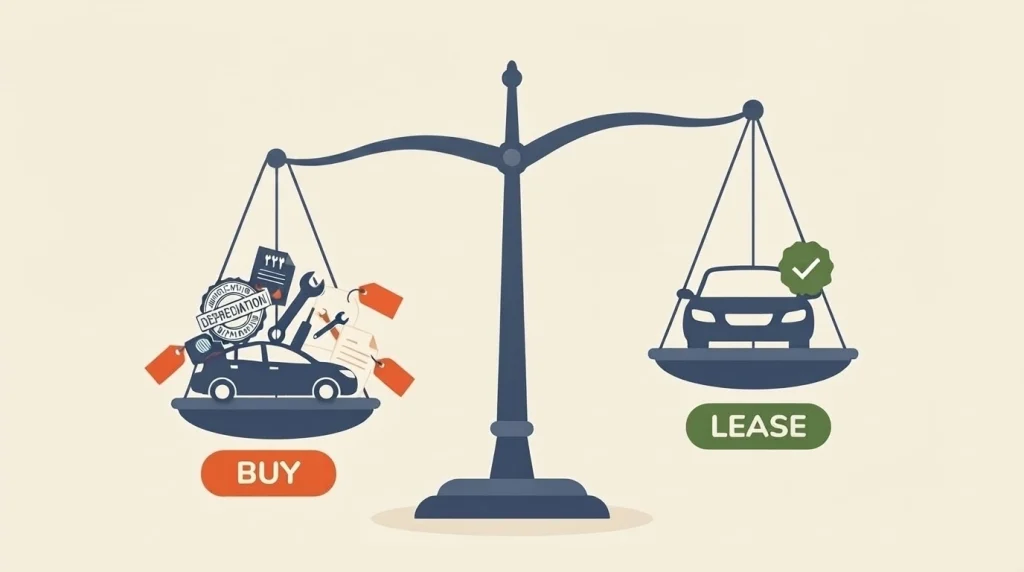
If you’re still deciding whether to lease at all, our guide on whether to lease or buy fleet vehicles compares the two on whole-of-life cost.
How to compare fully maintained lease quotes
Two fully maintained lease quotes are only comparable when they’re built on the same term, the same kilometre allowance and the same inclusions. A lower monthly figure often reflects a thinner set of inclusions or a different assumption, not a better deal.
When comparing quotes, check:
- Term and kilometres. Both quotes should use the same term and annual allowance, and that allowance should match how the vehicle is really used
- Itemised inclusions. Get a written list of what’s in and what’s out, including insurance and fuel and toll management
- Tyre allowance. Find out how many tyres are included and what happens if you need more
- How maintenance is handled. Ask whether the maintenance budget is fixed for the term or reviewed along the way, and how unexpected repairs are treated
- Excess kilometre rates. Check the rate per kilometre over the allowance, and whether the allowance can be adjusted mid-term
- End-of-lease condition. Ask how the vehicle will be assessed when it’s returned, and how damage beyond fair wear and tear is charged
- Early termination. Understand the cost of ending the lease early if the business changes
- Account management and reporting. Find out who your account manager will be and what reporting you’ll get on costs and usage
What happens at the end of the lease?
At the end of a fully maintained operating lease, you return the vehicle to the provider. There’s no balloon payment and no resale to manage. The process generally runs like this:
- Plan the replacement. Most businesses line up the next vehicle before the lease ends so there’s no gap in service
- Return the vehicle. It’s inspected against the agreed condition standards and kilometre allowance
- Settle any charges. Damage beyond fair wear and tear or excess kilometres is charged at this point
- Move into your replacement vehicle. Your drivers pick up the new vehicle and carry on as normal
Is a fully maintained operating lease right for your business?
A fully maintained operating lease suits most businesses running light commercial and passenger fleets, particularly those without a dedicated fleet role.
It’s a strong fit if you want:
- Predictable costs for every vehicle
- A regular replacement cycle
- As little fleet admin as possible
It’s less suited to:
- Vehicles that do extremely high kilometres
- Highly specialised builds
- Businesses with strong in-house maintenance that would rather control repairs themselves
In those cases, a finance lease or a standard operating lease may suit better.
How Your Fleet Team delivers a fully maintained operating lease
Your Fleet Team’s fully maintained operating lease bundles vehicle funding with our fleet management services. Servicing, tyres, registration, comprehensive insurance, roadside assistance, fuel and toll management, infringement handling, telematics, driver coaching, FBT reporting and consolidated reporting are all included, and every client has a dedicated account manager from our Australian team. Because we own the vehicles, insurance is arranged through us and included in your monthly payment.
- Sourcing: vehicles at competitive fleet pricing through our national dealership relationships
- Fit-outs: coordinated so vehicles arrive ready to work
- Running costs: kept down through our pre-negotiated maintenance and tyre rates
- Visibility: clear fleet reporting that shows where every dollar goes
Full details are on our fleet leasing page.
Frequently Asked Questions
Is insurance included in a fully maintained operating lease?
Sometimes. Insurance can be bundled into a fully maintained operating lease, but it isn’t always included by default. Check whether it’s in the quote, and what the excess and cover levels are.
At Your Fleet Team, yes. We own the vehicles, so insurance is arranged through us and included in your monthly payment.
Can we choose our own workshop?
Servicing under a fully maintained lease is usually carried out through the provider’s approved service network, which is how negotiated rates are kept low. If you have a preferred workshop, raise it at the start.
What happens if a vehicle needs an unexpected repair?
Repairs from normal wear are generally covered under a fully maintained operating lease. Damage from accidents or misuse is usually handled through insurance or charged separately.
Can we change the kilometre allowance during the lease?
Often, yes. If your usage changes significantly, the allowance and monthly rate can usually be reviewed during the term. It’s better to adjust early than to face excess kilometre charges at the end.
Is a fully maintained operating lease tax deductible?
Lease payments are generally tax deductible for the business-use portion of the vehicle, and GST is claimed through your BAS. Private use can bring FBT into play, so confirm the details with your accountant.
Can fit-outs be included in the lease?
Yes. Trays, canopies, shelving and signwriting can generally be included so the vehicle arrives ready to work. Agree upfront how fit-outs will be handled when the vehicle is returned.
Get a fully maintained lease quote you can compare
If you’re looking at fully maintained operating leases, or want a second opinion on a quote you already have, Your Fleet Team can build a quote on the same term, kilometres and inclusions so you can compare like for like.