Fleet leasing lets a business use vehicles for a fixed term and a fixed monthly cost, without buying them outright. For most Australian businesses running cars, utes and vans, it’s the most practical way to fund a fleet: capital stays in the business, costs are predictable, and much of the risk and admin of ownership sits with the leasing provider. This guide from Your Fleet Team explains how fleet leasing works, the difference between an operating lease and a finance lease, where sale and leaseback fits, and how to choose the right structure for your fleet.
Key takeaways
- Fleet leasing gives your business the use of vehicles for an agreed term in exchange for regular payments, with no large upfront purchase
- The two main lease types are operating lease and finance lease. The biggest difference between them is who carries the risk on the vehicle’s value at the end of the term
- An operating lease suits businesses that want fixed costs and no resale risk. A finance lease suits businesses that want more control and are comfortable managing resale
- Sale and leaseback lets a business with an owned fleet release that capital without replacing its vehicles
- Any structure can be standard (funding only) or managed, where the day-to-day running of the fleet is bundled in
- The right choice depends on how your vehicles are used, how long you keep them, and how much of the admin you want to hand over
What is fleet leasing?
Fleet leasing is an arrangement where a leasing provider funds your business vehicles and you pay a regular amount to use them over a set term, usually three to five years. Instead of buying each vehicle and carrying it on your books as an owned asset, you pay for the use of it. You can see how we structure each option on our fleet leasing page.
The arrangement can be as simple or as complete as you need:
- Funding only: the provider funds the vehicles and your team handles everything else
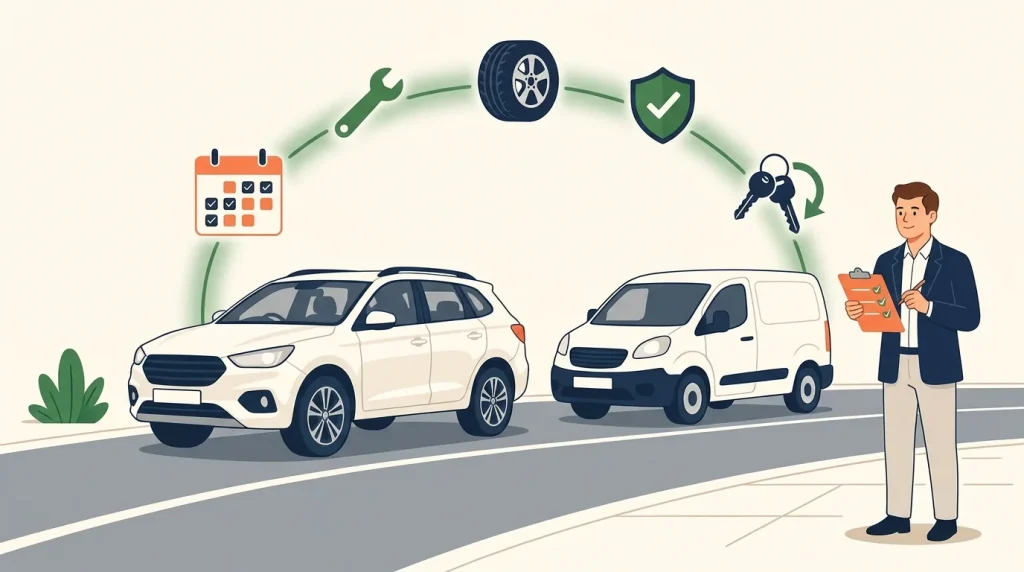
- Fully managed: the provider sources the vehicles, coordinates fit-outs, manages servicing, tyres and registration, provides reporting, and takes each vehicle back at the end of the term
Fleet leasing is separate from who runs your fleet day to day. You can lease vehicles and manage them in-house, or bring in a partner for both. Our guide to outsourced fleet management covers the management side in detail.
How fleet leasing works
Fleet leasing follows the same basic steps whichever structure you choose. The detail changes, but the process is broadly this:
- Assess your needs. Vehicle types, how they’re used, annual kilometres, fit-out requirements and how long you’d normally keep each one. The term and kilometre allowance have the biggest effect on your monthly payment, so base them on real usage rather than a guess
- Choose a structure. Operating lease, finance lease or sale and leaseback, either standard or managed
- Source the vehicles. The provider buys the vehicles through its vehicle procurement process, ideally using fleet pricing and dealer relationships to get a better price than a single business could
- Fit out and deliver. Trays, canopies, shelving, toolboxes and signwriting are arranged so each vehicle arrives ready to work
- Run the fleet. You pay a fixed monthly amount for the term. On a managed lease, the provider also handles the day-to-day running of the vehicles.
- End the term. What happens next depends on the structure:
- Operating lease: return the vehicle
- Finance lease: pay the balloon, usually by selling or refinancing the vehicle
- Either way: move into a replacement vehicle if you need one
The main types of fleet lease
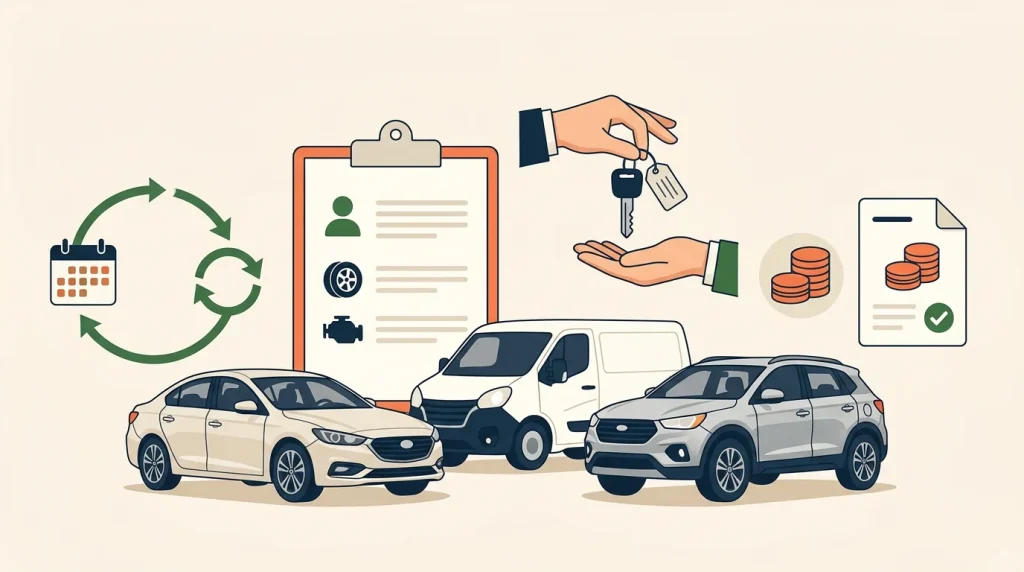
There are two main types of fleet lease in Australia: operating lease and finance lease. Sale and leaseback isn’t a separate lease type. It’s a way of moving vehicles you already own onto a lease, so it’s included here alongside the other two. Each can be taken as a standard arrangement or a managed one.
| Operating lease | Finance lease | Sale and leaseback | |
|---|---|---|---|
| In short | Fixed monthly rental, hand the vehicle back at the end | Monthly rental plus a residual (balloon) payment at the end | Provider buys your existing vehicles and leases them back |
| Who carries residual value risk | Provider | Your business | Provider |
| Upfront cost | Typically none | Typically none | None, and you receive cash for the vehicles |
| Kilometre limits | Yes, agreed at the start | No excess kilometre charges | Depends on the lease structure used |
| End of term | Return the vehicle | Pay the balloon, usually by selling or refinancing | Return or replace as agreed |
| Best suited to | Businesses wanting fixed costs and no resale risk | Businesses wanting control and any upside at resale | Businesses with capital tied up in an owned fleet |
The sections below explain each one in more detail.
Operating lease
An operating lease is a long-term vehicle rental. The provider owns the vehicle, and your business pays a fixed monthly amount to use it for an agreed term and kilometre allowance. At the end of the term, you hand it back with no resale responsibility.
Because the provider owns the vehicle, it also carries the residual value risk. If the used market is weaker than expected when the lease ends, that’s the provider’s problem, not yours. That’s one of the main reasons operating leases are a very common way to fund light commercial and passenger fleets.
Standard or fully maintained
A standard operating lease covers the vehicle funding only. Your team still books services, pays for tyres and repairs, and renews registration.
A fully maintained operating lease rolls those running costs into the monthly payment. What’s covered varies by provider, but it typically includes servicing, tyres, registration and roadside assistance, and can extend to insurance, fuel and toll management, infringement handling, driver coaching, FBT reporting and consolidated reporting. Your business pays one predictable amount per vehicle for everything that’s included. We cover what’s included, how the rate is worked out and how to compare quotes in our guide to the fully maintained operating lease.
An operating lease suits: businesses that want predictable costs, a regular replacement cycle and no involvement in selling vehicles at the end of the term.
Finance lease
A finance lease is a funding arrangement where the provider buys the vehicle on your behalf and your business pays a monthly rental, with a residual (balloon) payment due at the end of the term. Your business has full operational control of the vehicle and carries the risk on its end-of-term value.
The residual is set at the start, based on what the vehicle is expected to be worth when the lease ends. Because part of the cost is deferred to the balloon, monthly payments are generally lower than they would be without it. When the lease ends, the balloon is paid, usually by selling the vehicle or refinancing it.
That creates both an opportunity and a risk:
- The upside: if the vehicle sells for more than the residual, your business keeps the difference
- The risk: if it sells for less, your business covers the gap
- More freedom: you choose how the vehicle is maintained and repaired
- No kilometre penalties: there are no excess kilometre charges
A finance lease suits: businesses that want more control over the vehicle, have their own maintenance arrangements, and are confident managing resale.
Operating lease vs finance lease: the key differences
The key difference between an operating lease and a finance lease is who carries the risk on the vehicle’s value at the end of the term. Under an operating lease it’s the provider. Under a finance lease it’s your business.
In practice, that plays out in three ways:
- End of term: an operating lease has no balloon, so you simply return the vehicle. A finance lease ends with a balloon payment, usually covered by selling or refinancing
- Kilometres: an operating lease sets a kilometre allowance with charges for going over. A finance lease has no excess kilometre charges
- Cost certainty vs control: an operating lease gives you a fixed cost and no resale risk. A finance lease gives you more control and any gain at resale, along with any loss
A note on accounting. If your business reports under Australian Accounting Standards, AASB 16 Leases requires leases longer than 12 months to appear on your balance sheet, whichever type you choose. The practical differences between the two are about cost certainty, control and risk, not whether the lease shows up in your accounts. Talk to your accountant about how each would be treated for your business.
Sale and leaseback
Sale and leaseback is where a leasing provider buys your existing vehicles at fair market value and leases the same vehicles back to your business. You get a cash injection from the sale and keep using the vehicles without interruption.
It’s designed for businesses that:
- Bought their fleet outright and now want that capital working elsewhere
- Want to move from ownership to leasing without waiting for every vehicle to come due for replacement
- Have vehicles spread across several loans and want one simpler agreement
At Your Fleet Team, the process works like this:
- We assess each vehicle’s age, condition and maintenance history
- Once approved, we buy the vehicles at fair market value
- We lease them back to you on a standard or managed agreement
- Your drivers keep the same vehicles, and your customers see no change
Sale and leaseback suits: businesses with an owned fleet that want to release capital, fix their costs, or hand over the admin without replacing their vehicles.
Standard or managed: how much do you want to hand over?
Every lease structure can be standard or managed. A standard lease covers the funding only. A managed lease adds the day-to-day running of the fleet, handled by the provider.
Under a managed lease, the admin that usually falls on an operations or office manager moves off your team. What’s covered varies between providers, so always ask for the list in writing. At Your Fleet Team, a managed lease includes:
- Servicing, repairs and tyres
- Registration renewals
- Comprehensive insurance
- Roadside assistance
- Fuel and toll management
- Infringement handling
- Telematics
- Driver safety coaching
- FBT reporting
- Consolidated fleet reporting
The full scope is on our outsourced fleet management service page.
A dedicated account manager becomes your single point of contact.
At Your Fleet Team, insurance is included whether your lease is standard or managed. We own the vehicles, so we insure them, and the cost is part of your monthly payment.
| Standard lease | Managed lease | |
|---|---|---|
| Vehicle funding | Included | Included |
| Servicing and repairs | Arranged by your team | Handled by the provider |
| Tyres and registration | Arranged by your team | Handled by the provider |
| Insurance | Included, through us | Included, through us |
| Fleet reporting | Your own records | Consolidated reporting provided |
| Best for | Businesses with internal fleet resources | Businesses that want the admin off their plate |
If your business doesn’t have a dedicated fleet role, a managed lease is usually the better fit.
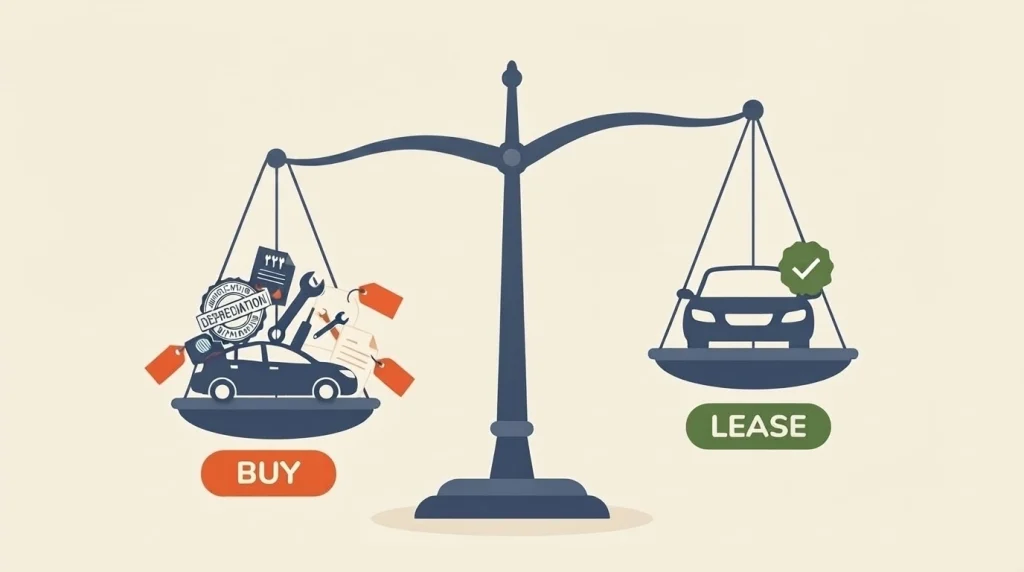
Is leasing better than buying?
For most businesses running light commercial and passenger fleets, leasing is the better option because it:
- Keeps capital free for the rest of the business
- Replaces unpredictable running costs with a fixed payment
- Removes the risk and effort of selling vehicles at the end of their life
Buying can still make sense in specific cases, such as very high-kilometre work or vehicles you plan to keep well beyond five years. We compare the two in detail, including the real cost of ownership and tax considerations, in our guide on whether to lease or buy fleet vehicles.
How to choose the right lease structure
The right lease structure depends on how your vehicles are used, how long you keep them, and how much risk and admin you want to carry. This quick guide points you in the right direction.
| If your business… | Consider |
|---|---|
| Wants a fixed monthly payment that covers the running costs, with no resale risk | Fully maintained operating lease |
| Has internal fleet admin and just wants to avoid ownership risk | Standard operating lease |
| Wants control over maintenance and any upside at resale | Finance lease |
| Wants finance lease control without doing the admin | Managed finance lease |
| Owns its vehicles and wants the capital back | Sale and leaseback |
| Owns its vehicles and wants to keep them, but not the admin | Outsourced fleet management for owned vehicles |
You don’t have to use one structure across the whole fleet. Most vehicles might sit on operating leases, while a specialist vehicle uses a finance lease or stays owned.
If you keep ownership of your vehicles, you also keep your own insurance. Under Your Fleet Team’s fleet management service, vehicles we don’t own stay with the insurer you choose.
How Your Fleet Team helps
Your Fleet Team offers operating leases, finance leases and sale and leaseback, each as a standard or managed agreement. We start by looking at how your fleet actually runs, then recommend the structure that fits rather than the one that’s easiest to sell.
What that looks like in practice:
- Sourcing: vehicles bought at competitive fleet pricing through our national dealership relationships
- Fit-outs: coordinated through specialist suppliers, so each vehicle arrives ready to work
- Insurance: because we own the vehicles, cover is arranged through us and included in your monthly payment
- Management: on managed agreements, a dedicated account manager from an Australian team, consolidated reporting, and our pre-negotiated maintenance and tyre rates
- End of life: we handle the return or vehicle disposal
See the full detail of each option on our fleet leasing page.
Frequently Asked Questions
How long is a typical fleet lease?
Most fleet leases run for three to five years, though shorter and longer terms are available. The right term depends on how hard the vehicles work and how often you want to replace them. Higher-kilometre vehicles often suit shorter terms.
Can a small business lease a fleet?
Yes. Fleet leasing isn’t only for large companies. Businesses with a handful of vehicles lease for the same reasons larger fleets do: to protect cash flow, fix costs and reduce admin.
Can fit-outs and signwriting be included in a lease?
Yes. Trays, canopies, shelving, toolboxes and signwriting can generally be included in the lease so the vehicle arrives ready to work. It’s worth agreeing upfront how fit-outs and branding will be handled at the end of the term.
Can we mix different lease types in one fleet?
Yes. You might run most vehicles on a fully maintained operating lease and keep specialist vehicles on a finance lease. The right mix depends on how each vehicle is used.
What happens if we need to end a lease early?
Most leases can be ended early, but there’s usually a cost, which depends on the time remaining and the vehicle’s value at the time. Ask how early termination works before you sign.
Are fleet lease payments tax deductible?
Lease payments are generally deductible for the business-use portion of the vehicle, and GST can be claimed through your BAS. Private use can trigger FBT, so check the details with your accountant.
Find the right lease structure for your fleet
Choosing a lease structure is easier when you can see the options side by side for your own vehicles. Tell Your Fleet Team how your fleet is used, and we’ll show you what each structure would look like and which one fits best.