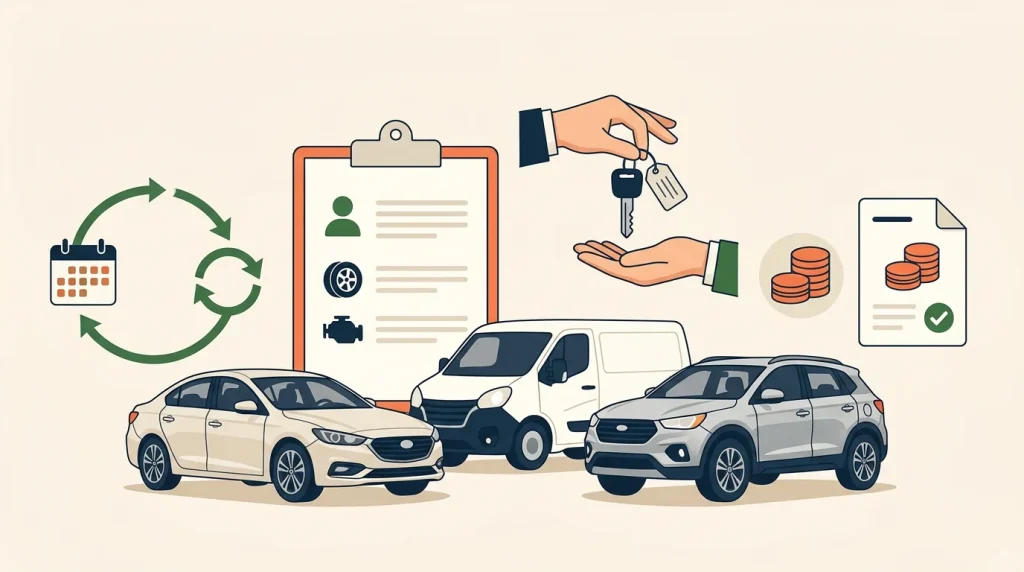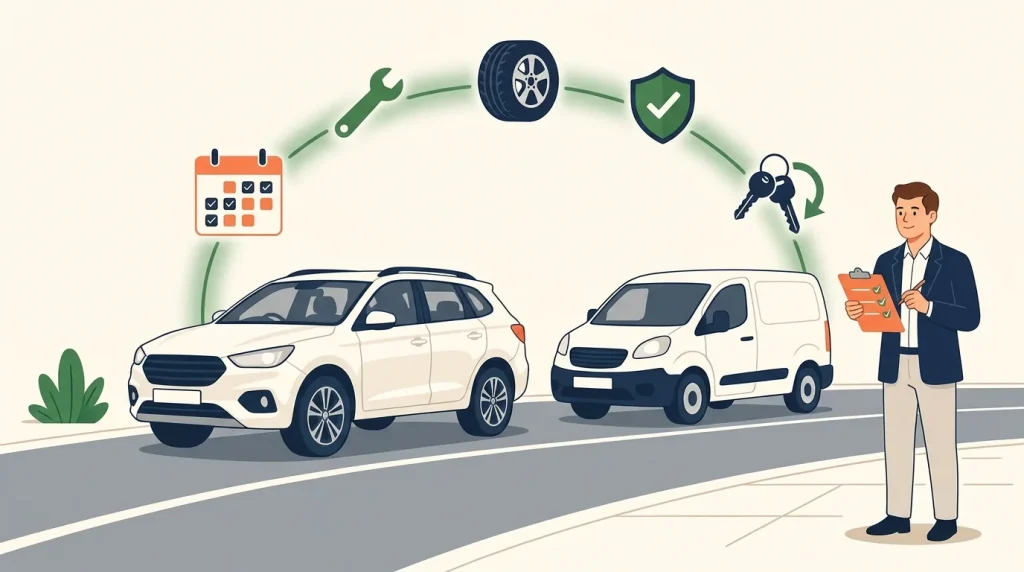
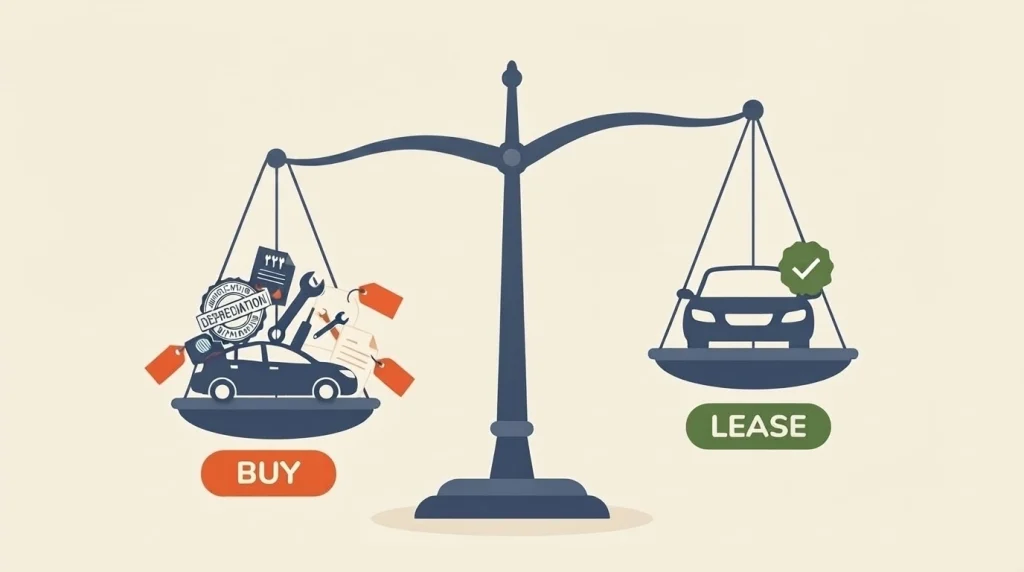
For most Australian businesses running cars, utes and vans, leasing fleet vehicles is the stronger choice. It keeps capital in the business, turns an unpredictable cost into one fixed monthly figure, and hands the depreciation risk, resale and much of the admin to someone else. Buying still has its place, and we’ll cover exactly where. This guide from Your Fleet Team covers the benefits of leasing over buying, the real cost of ownership, the tax points to know, and the situations where buying still comes out ahead.
Key takeaways
- Leasing suits most businesses running light commercial and passenger fleets, particularly where capital is better spent on growth than on depreciating vehicles
- Comparing a lease payment to a purchase price gives the wrong answer. Ownership carries costs that never appear on the quote: depreciation, resale risk, disposal time and ongoing admin
- You don’t need to replace your current vehicles to start leasing. Sale and leaseback converts an owned fleet into a leased one
- Buying can still make sense for very high-kilometre work, long holding periods, or where spare capital has nowhere better to go
- Leasing and buying are taxed differently, so run the final numbers past your accountant
Why leasing usually beats buying
Leasing usually wins because buying ties up capital in an asset that starts losing value the day it’s registered, and leaves your business carrying every risk and task that comes with owning it. A lease swaps all of that for a fixed monthly cost over an agreed term.
Buying a fleet means your business:
- Puts significant cash into each vehicle upfront
- Pays to service, register and insure it for as long as it’s on the road
- Has to sell it at the end, for whatever the used market is paying that month
None of that shows up in the purchase price, but your business pays for all of it.
A lease changes the shape of that cost. You get the vehicle for a set term and kilometre allowance, pay the same amount every month, and hand it back at the end. If you’re new to the different lease types, our guide to fleet leasing explained walks through each one. If you’d like to see how we structure leases for Australian businesses, our fleet leasing page sets out the options.
The benefits of leasing fleet vehicles
The main benefits of leasing are capital that stays in the business, predictable monthly costs, no depreciation or resale risk, no disposal work, a newer fleet, and far less admin when maintenance is bundled in.
Your capital stays working in the business
Buying outright or putting down a large deposit pulls cash out of the business when it’s often needed most, while you’re growing, hiring or taking on new work. Leasing spreads the cost across the term, so that money stays available for staff, equipment or anything else that earns a return, and your existing loan and overdraft facilities stay free.
One predictable monthly cost
With an operating lease, you know what each vehicle costs every month for the life of the lease. On a fully maintained lease, servicing, tyres, registration, roadside assistance and more are rolled into that same payment, so there’s no surprise tyre bill landing in a tight month. Insurance is often bundled in as well, though providers differ, so ask. At Your Fleet Team it’s always included. Fuel, tolls and fines are the exception, as they’re passed through at actual cost.
No depreciation or resale risk
Under an operating lease, the leasing company owns the vehicle and carries the risk on its end-of-term value. If used prices fall, that’s its problem. An owned fleet takes whatever the market pays on the day it sells.
No disposal hassle
When the lease ends, you hand the vehicle back. There’s no detailing, advertising, fielding calls from buyers or transferring registration, which adds up quickly for a business replacing several vehicles a year.
A newer, safer fleet
Leases typically run on three to five year cycles, so drivers stay in current models with up-to-date safety features and better fuel efficiency. Driving is the most dangerous thing most of your team does at work, and newer vehicles are one of the simplest ways to look after them.
Less admin
A fully maintained operating lease combines the vehicle with its day-to-day running, handled by a dedicated account manager, with one invoice in place of a pile of separate bills. Our guide to the fully maintained operating lease covers exactly what’s included.
The real cost of owning a fleet
The purchase price is only the start. Owning a fleet means carrying depreciation, resale risk, maintenance, registration, disposal and the admin time that ties it all together. That’s why comparing a lease payment against a purchase price gives a misleading answer. The fair comparison is the whole cost of each vehicle across the time you’ll use it.
| Cost | Buying | Fully maintained operating lease |
|---|---|---|
| Upfront outlay | Full purchase price or a deposit | Typically none |
| Depreciation | Your business | Leasing company |
| Resale value risk | Your business | Leasing company |
| Servicing and tyres | Paid as they come up | Included in the monthly payment |
| Registration | Paid by you each year | Included |
| Insurance | Arranged and paid by you | Often bundled in, so check with your provider. Included with Your Fleet Team |
| Roadside assistance | Arranged separately | Included |
| Fleet admin time | Your team | Largely handled for you |
| Disposal | Your team sells each vehicle | Hand the vehicle back |
| Cost certainty | Low, costs vary year to year | High, one fixed monthly payment for what’s included |
Admin time is the line most businesses underestimate. Without a dedicated fleet role, booking services, chasing renewals and selling old vehicles usually falls to an operations or office manager, on top of the job they were hired to do.
Already own your vehicles? You can still switch
Sale and leaseback lets a leasing provider buy your existing vehicles at fair market value and lease them straight back, so the capital comes out without replacing a single vehicle. Your drivers keep the same vehicles, and as each one comes due for replacement it can move onto a new lease, sourced through our vehicle procurement service.
Tax and accounting considerations
Leasing and buying are taxed differently:
- Leasing: lease payments are generally deductible for the business-use portion of the vehicle, with GST claimed through your BAS as each payment is made
- Buying: you claim depreciation and GST credits instead, and for passenger vehicles both are capped by the ATO car limit
The ATO car limit for 2026-27 is $69,883. When your business buys a passenger vehicle, it caps both the depreciation you can claim and the GST you can claim back, which can’t exceed $6,353. Leasing works differently. You claim the GST included in each lease payment, and the $6,353 cap doesn’t apply, as the ATO confirms. For vehicles priced under the car limit, this makes no difference. For vehicles priced above it, leasing can mean more GST back.
One point often gets misreported. Before AASB 16 took effect in 2019, operating leases generally weren’t recorded on the balance sheet. That’s no longer the case: if your business reports under Australian Accounting Standards, leases longer than 12 months now appear on the balance sheet. The old claim still turns up in some Australian guides and websites, but the case for leasing rests on cash flow, cost certainty and risk. This is general information only, so check the details with your accountant.
Getting the most out of a lease
A lease works best when its terms match how your vehicles are actually used.
- Set the kilometre allowance from real data. Use telematics or odometer history. Too low and you risk excess kilometre charges; too high and you pay for kilometres you never drive.
- Know what “fully maintained” covers. Inclusions vary between agreements. Check whether servicing, tyres, registration, insurance, roadside assistance, fuel and toll management, infringement handling and reporting are covered, and get the list in writing. Insurance is the one to ask about first, because providers treat it differently. At Your Fleet Team it’s always included, because we insure every vehicle we own. Our guide to the fully maintained operating lease explains what to look for.
- Plan for change. Ask how vehicles can be added, swapped or ended early if the business grows or shifts direction.
When buying still makes more sense
Buying can come out ahead when vehicles cover very high kilometres, are kept well beyond a typical lease term, are highly specialised, or when the business has spare capital with no better use.
- Very high kilometres: heavy use pushes lease payments up and can make excess kilometre charges hard to avoid
- Long holding periods: if you’re happy to run vehicles well past five years, a paid-off vehicle costs only what it takes to keep running
- Specialised builds: vehicles with little resale market can be harder to lease
- Idle capital: cash sitting unused carries less of an opportunity cost when it goes into vehicles
Owning doesn’t mean doing it all yourself. Your Fleet Team manages owned fleets through our fleet management service and handles vehicle disposal when it’s time to sell. Insurance on vehicles you own stays with your own provider.
How Your Fleet Team helps
We start with your fleet as it actually runs, then lay leasing and ownership side by side on whole-of-life cost and recommend the structure that suits. If leasing is the right call, we:
- Source vehicles through our national dealership relationships
- Coordinate fit-outs so every vehicle arrives ready to work
- Arrange comprehensive insurance, included in your monthly payment
- Set up the lease as a standard or managed agreement
See all the options on our fleet leasing page.
Frequently Asked Questions
Is it better to lease or buy a vehicle for your business?
For most businesses, leasing comes out ahead once depreciation, servicing, resale and admin time are counted, and it can work out cheaper even if total lease payments exceed the purchase price. The main exceptions are vehicles that do very high kilometres or are kept for many years.
Can I claim lease payments as a tax deduction?
Lease payments are generally tax deductible for the business-use portion of the vehicle, and the GST in each payment is claimed through your BAS. Private use can bring FBT into play, so check with your accountant.
What happens at the end of an operating lease?
You return the vehicle, subject to the agreed condition standards and kilometre allowance. There’s no resale to manage and no balloon payment, and most businesses move straight into a new vehicle on a new lease.
Can we lease if we already own our vehicles?
Yes. Sale and leaseback lets you sell your existing vehicles to a leasing provider and lease them straight back, freeing up capital while your drivers keep the same vehicles.
What if we go over the kilometre allowance?
Under an operating lease, going over the allowance usually means an excess kilometre charge at the end of the term. If usage changes partway through, review the allowance early rather than waiting.
Find out what leasing would look like for your fleet
If you’re weighing up whether to lease or buy your next vehicles, or whether the vehicles you already own should move onto a lease, Your Fleet Team can lay out the options side by side for your fleet and show you what each would cost.